
AI vs. Creative Contracts: They don't even need our source files anymore
#05: On how AI shortcuts are changing the rules on creative contracts, assets control and project rollouts.

We’ve been a bit quiet on here for the past month, mostly because May was an absolute whirlwind for the studio. We mentored a portfolio review session downtown and gave a lecture at the Fine Arts school, all while sitting next to some of the biggest design references in Porto. It was a real sitting at the grown-ups’ table (but still feeling like a kid) kind of moment. On top of that, we wrapped up a huge, intense client project that had us working around the clock. To celebrate surviving the chaos, the team finally skipped town last week for a quick holiday.
We were supposed to be completely unplugged, drinking wine in the sun, but naturally the studio brain never really shuts down. We ended up getting into this intense, looping debate about a project situation that happened right before we left. It was a blind spot we had never even considered before, and the deeper we got into it on our walk back from dinner, the more we realised we needed to bring this question back to Porto and the creative community.
We don’t want to name any names but here’s the scoop. We recently quoted for a cool new project. (By Portuguese standards), it was a pretty good budget, around 15k total from start to finish. The scope covered most of the things an event needs: branding, a bespoke website, and the full event design. Because of how these big events work, step one was just to provide a quick sample of the visual identity in a pitch deck PDF so the client could hand it out to sponsors and secure the funding to pay for the rest of the project. The understanding was that once they got the money, they would work with us to execute the whole thing.
We sent the pitch over. The client loved it and then… went quiet for months while dealing with their sponsors. At some point we were thinking the project fell through and wasn’t going to happen until we finally got a message back: Let’s meet and get things going, the event is happening.
We walked into that meeting so hyped to get to work. But as we started talking, we realised that during those months of silence, the client had already built a functioning website *gasp*. They didn’t wait for our vector files, colour codes, font files etc, and they didn’t ask us to develop anything. They just took the static screenshots from our PDF, uploaded them into Claude AI, and had it build a website that matched our direction. It wasn’t excellent design, it wasn’t as compelling as it could be (obviously), but the reality is, it served their immediate purpose and it was good enough for them.
And just like that, the 5k portion of our budget dedicated to building the website vanished and turned into a tiny 500€ consulting fee so we could give a few inputs to the developer they hired to install it. Our 15k project instantly shrank to 10k.
This got us thinking about a completely new challenge regarding the control of our assets and good ol payment leverage.
“Back in the day“, your biggest protection as a designer was that the client only got the deliverables once they paid the final invoice. We held the clean source files until the money hit the account. Now, we are realising that a client doesn’t even need the final files to launch something. They can take a screenshot of a concept presentation, feed it to an AI, and bypass that entire gatekeeper moment.
Before we all start hyperventilating and feeling doomed…
I came across this Demi Moore clip the other day about adapting to these changes. To “work with it“ rather than fight it. The comment section was filled with an insane amount of backlash. People are rightfully angry, anxious, and stressed about what these tools mean for our livelihoods. Seeing that reaction made me realize how serious this conversation really is and how many different perspectives there are to unpack. For us, the goal isn't to look away or pretend the issues this evolution brings up aren't real, but much like Demi, we don’t think this is the end of the world, and we, as optimists, don’t think AI is going to kill the entire creative industry. In fact, we believe the ultimate goal here is to figure out how to work with, and ideally even monetise these new AI workflows ourselves rather than get eaten by them.
Right now, we are stuck on the immediate, practical question: how do we avoid situations like the one that just happened to us?
Until last month, we hadn’t even considered this loophole. Now that it’s here, it opens up a lot of honest questions for creative businesses. How do we adapt our processes to protect our work? Do we change our contracts? Do we change the way we share our files so they can’t be cloned by an AI? If execution is becoming faster and more automated, how do we restructure our pricing so we don’t lose our margins? And honestly, how do we even build our portfolios if the live rollout out in the wild is an AI-deformed version of our concept? Do we link to a live website we didn't actually build, or do we just stop showing final execution altogether?
Because beyond the numbers, there is a huge question of creative control. I definitely don't want our creations to go out into the wild and be deformed by an AI that doesn't understand our vision, leaving us with a weird, distorted version of what we actually planned. We want to make sure the creation stays with us. If these tools are going to be implemented for faster production, it needs to happen under our direct supervision so the concept stays intact. It’s clear the value is shifting away from execution and into conceptualisation. Our minds, our ideas are becoming more precious than ever…
We don’t have a definitive answer for all of this yet, and that is exactly why we want to open up the discussion in person.
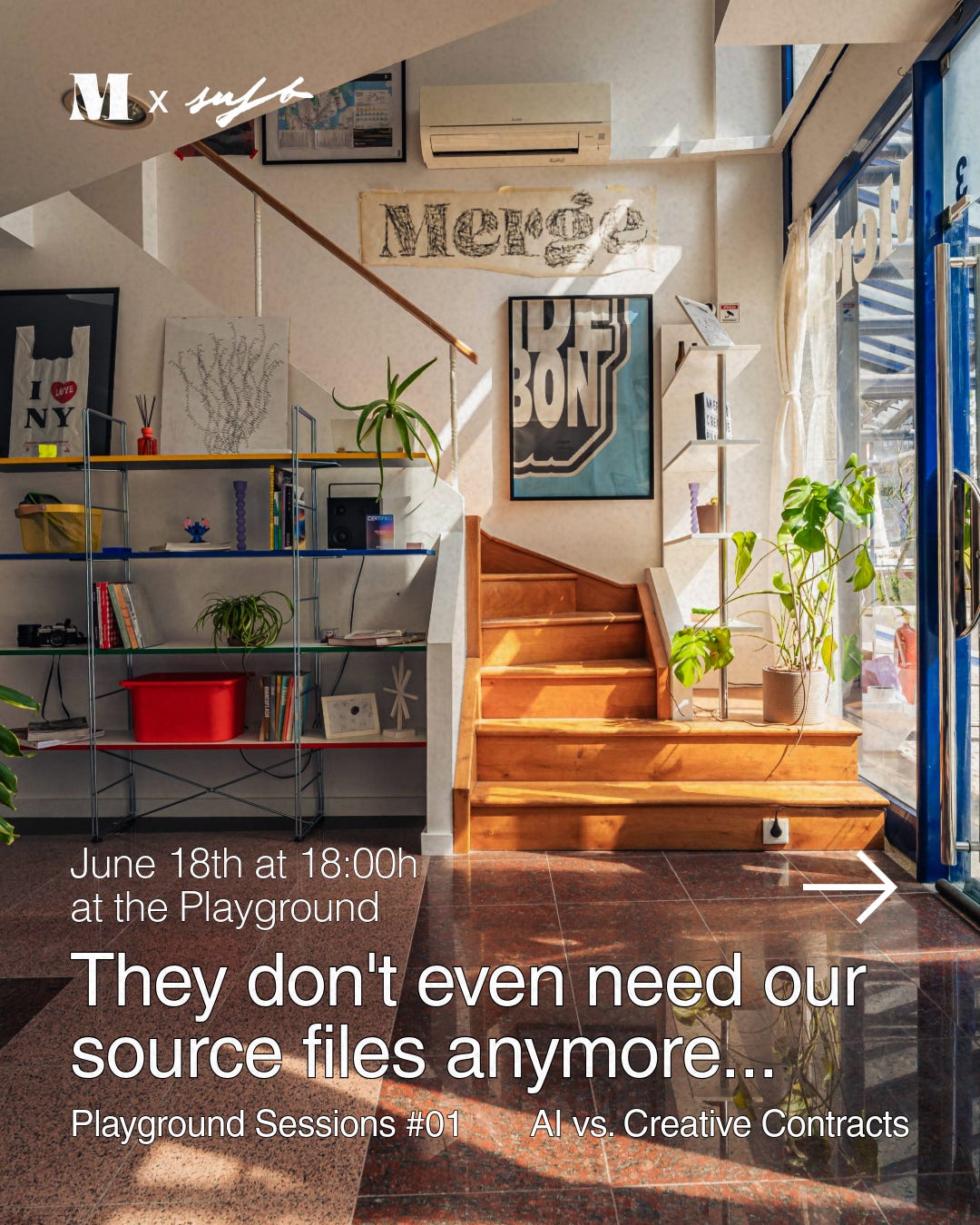
On June 18th at 18:00h, we are hosting a gathering at our studio. No formal panels, no boring lectures. Just a real, open space for designers, studio owners, and creatives in Porto to sit down after work, share honest perspectives, and figure out how we navigate and avoid situations like this together.
We want to finish this conversation in person. Space is limited, so if you want a seat at the table, you can sign up now through this form.
If you’re not in Porto for the event, tell me about your most recent struggle with adjusting to the presence of AI in your business. How do you think we should adapt our work processes?
TOP subject